On one hand a 500-ton asteroid is way too small to make a difference if the smelted iron and nickel could be safely landed on Earth. Nickel ore is quoted at about 30 USD per ton in Indonesia, so the asteroid's material might only be worth 15,000 USD on the Earth's surface.
But on the other hand, the smelted ore is much more valuable if used for earth-orbit construction, especially high orbit construction. SpaceX charges about 2,000,000 USD per ton to launch a payload into low earth orbit. The cost to put 500 tons of ore into space from earth would thus be 1 billion USD. By comparision, the mass of the International Space Station is about 500 tons.
This rough analysis shows that the most cost-effective mission would be the construction of large space facilities using material smelted from a well-chosen asteroid.
Excuse my ignorance here, but wouldn't the easiest solution of all just be both mining minerals and performing construction on the moon? Once you are established there, you pretty much have the space construction port you're looking for, do you not?
Low earth orbit might be where the investors are interested in. If so, it has been proposed for decades that an electric mass driver be constructed on the Moon for delivery of lunar ores to Earth orbit - or to a nearby Lagrange point.
A lunar base would be very expensive in terms of initial construction because it costs so much to climb from the Earth's surface through the Earth's gravity well, and then to descend safely on to the Moon's surface.
An interesting solution that I've followed has been the proposal to send tiny self-replicating robots to the Moon and have them construct everything else from Lunar materials. See for example: http://www.islandone.org/MMSG/aasm/
This good idea was most recently promoted by Newt Gingrich during his US presidential primary campaign. My own opinion is that private investment, not government money, should be used for space-based economic projects.
Several near-earth asteroids can be travelled to at a delta-vee lower than going to the Moon. Remember that the Moon still has a gravity and no atmosphere, so actually landing still takes a lot of energy. An asteroid on the other hand has no gravity (at this scale) and may swing by closer than the Moon does.
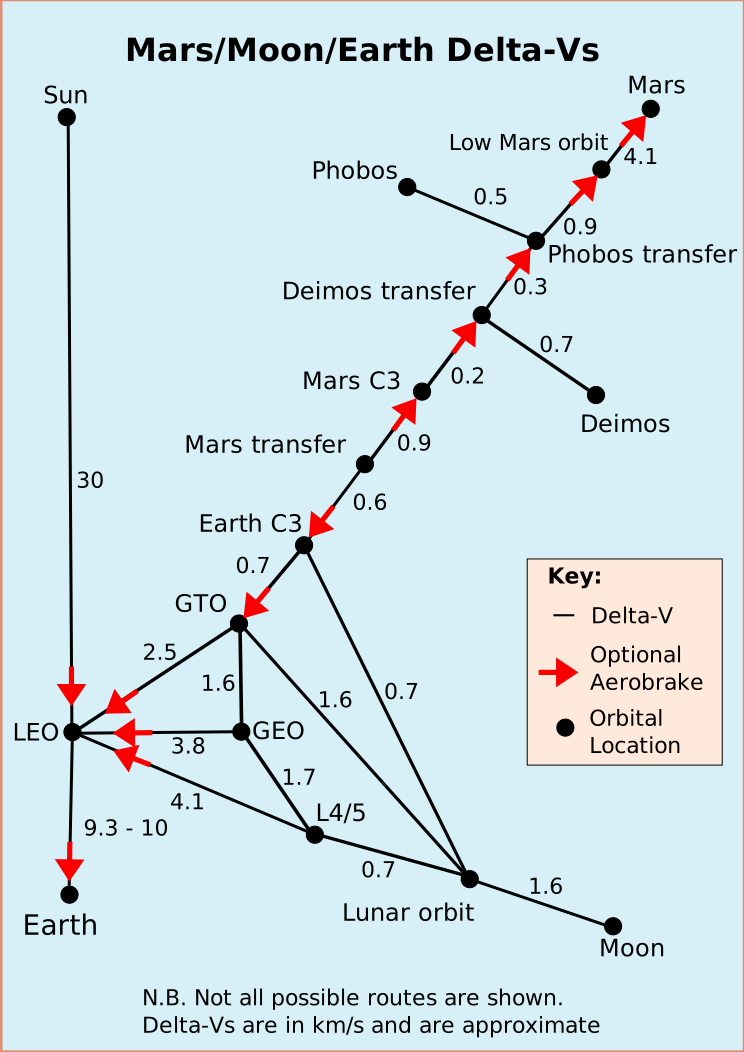
Not actually true. You're correct that it is cheaper to get from earth to low earth orbit (LEO) than to the moon. However it is cheaper to get to LEO from the moon than from earth. This has nothing to do with altitude; it's a function of the delta-v budget -- or the amount of momentum change that is required to get from one place to another:
As you can see, getting from earth to LEO requires 9.3-10 km/s of dv, depending on the type of rocket you are using. All of this must be high-thrust propulsion, otherwise you'll immediately fall back to earth. 9.3-10 km/s of high-thrust propulsion is indeed quite costly to implement.
On the other hand, to go from the lunar surface to LEO is only 5.5 km/s of dv -- and only 1.6 km/s of this (the trip from the lunar surface to lunar orbit) needs to be under high thrust. The rest of the dv can be done with relatively inexpensive low-thrust techniques which require little or even no propellants -- such as ion propulsion, solar sails, and aerocapture.
So to a rough order of magnitude, it's 2-6 times cheaper to get to LEO from the moon than from the earth.
Edit: miscalculated the lunar surface->LEO dv requirement.
I know nothing, but I would think gravity smelting and related operations would be much more technically difficult and risky than gravity based operations on the moon.
Regolite, the material of the moon's surface is a lot of pain. It's like sand, except with razor-sharp edges and it's much finer. It gets everywhere and destroys everything -- think about how much maintenace a car on a desert needs and multiply it by a big number. That's how bad it is.
Maybe that method of construction where you heat up the ore with mirrors, then blow air into it to inflate it, then let it cool would be easier, given how little industry we have in space at the moment.
Anyways, I think its good that we're starting with something 500 tons. Big enough to be interesting, not big enough to cause a huge catastrophe if it ends up colliding with Earth. When we're better at it we can go for larger asteroids.
I think the only real investment proposition here is to build and develop institutional knowledge and technology know-how so that at such a time that it is profitable and practical to extract resources however they may be extracted, that knowledge is worth the billions they spent on acquiring it (plus ~4% annual real opportunity costs, plus risk exposure).
Moving asteroids amounts to a potential weapon of mass destruction.
I expect some sort of space treaty to regulate the safe operation of such a venture, and in return provide some liability limits on the required insurance. Otherwise the investors have a tiny chance of being wiped out financially if some city gets hit.
Honestly, should they not get financially wiped out if they hit a city? Or do we just let them keep their money to fund criminal defense lawyers. I want the reaction to killing people to be more than "oops, that will be expensive".
I agree with you. I expect that should a city get hit, then international outcry would lead to the confiscation of all of the investor's assets, despite being shielded by a limited liability corporation.
For that reason the investors need insurance - and a very large amount of it considering the damage that a direct hit on a major city might cause. The investors would seek some sort of limit on the liability - say 100 billion dollars, and in return they should eagerly submit to regulatory oversight of their plans, procedures and operations.
In order to insure such an asteroid moving scheme and establish a premium, insurance companies must determine a risk probability distribution, and they must know what the maximum liability would possibly be. Over many decades, there may be observations of close calls or actual damage causing situations that can inform the actuarial calculation, but at the initial point its simply educated estimates.
dude a 7m asteroid would be literally impossible to hit a city with. it's far too small - would burn up in the atmosphere at around 30km. there would be some small meteorites that would survive in all likelihood, especially as the speed would be a little slower than usual, but those are very trivial in danger. asteroids this size enter the atmosphere every couple of years naturally - occasionally over populated areas - and have never caused meaningful amounts of damage.
> Moving asteroids amounts to a potential weapon of mass destruction.
Carl Sagan spoke out against research into destroying "rogue" comets or asteroids that might hit Earth. He believed that the potential for military misuse of the technology far outweighed any real collision threat.
Maybe not, at least not if they made only negligent errors. Hitting a city is hard (with the size of asteroid we are talking about here). If they didn’t do it on purpose but because of a combination of some negligent errors and extremely bad luck I’m not sure whether they deserve to be financially wiped out.
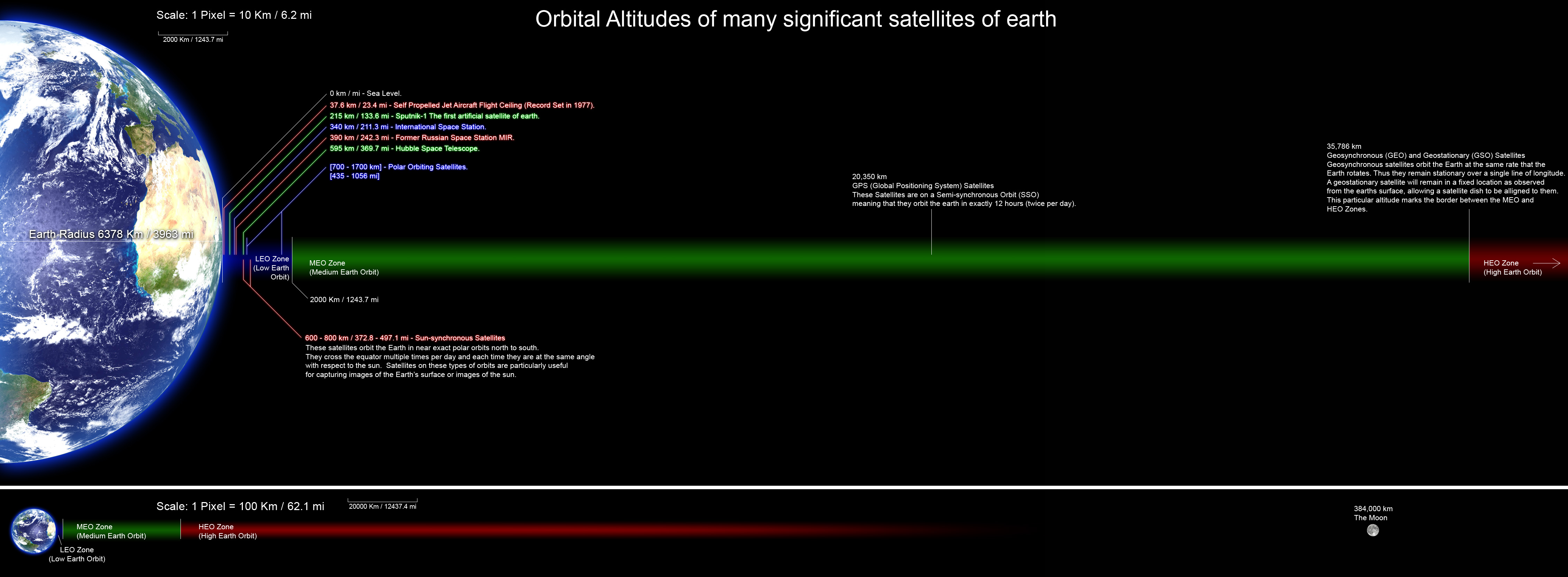
Bringing an asteroid into LEO may be too dangerous due to orbit decay.
According to this calculator, a 500ton roughly spherical rock, assuming a density of 3g/m^3 so a surface area of 3600m^2 would live for 20 years at 500km altitude.
At altitudes higher than 1000km, the thing could live for centuries, although no matter how high, orbits still get perturbed eventually and decay (in the Earth-Moon system).
(Note that at 380km altitude, the ISS is never more than 1-2 years away from burning up in the atmosphere, so it needs periodic boosts to prevent it)
Is it possible to bootstrap this process by capturing low mass asteroids crossing near LEO? A small tug device paired with a separate crude ore processing unit with 3-D printing capabilities seems like a minimum viable unit. A few of these units in orbit, a few at LaGrange points, and we'll start leveraging the amount of re-usable construction material under human control in near space. It might also be a way to clean up 50+ years of exploration debris. Instead of de-orbiting a satellite when its productive life has ended we could just melt down, salvage, and repurpose much of the material. Literal pie-in-the-sky, but that's what it would take.
I wonder if sometime in the future, we will have exhausted Earth's fuel and metal resources so badly that we are no longer capable of building the tools necessary to make our way into space, including projects like this one.
Metal resources don't get exhausted -- nearly all of the copper mined at the time of the pharaohs is still in use. When the cost of mined material rises, we simply reuse some of the metal that is in use in lower-value places. Example: all the copper piping that is presently being ripped up and replaced with plastic everywhere in the world.
Nuclear fuel resources are essentially inexhaustible -- there is enough Thorium to feed constant growth for at least tens of thousands of years. Which should be enough for development of fusion.
According to the International Copper Association, more than 80% of all copper ever mined is still in active use. Copper doesn't materially degrade in use -- used material can simply be recast or rewrought for a new use.
Has anyone seen official confirmation that this is what will be announced next week? I've seen nothing but speculation. I guess the fact that the speculation hasn't been quashed is weak confirmation, but I wondered if there was more...
"Perhaps more significantly, low-energy pathways lead away from L1 and L2, which can be exploited to send spacecraft to Jupiter, Mars, asteroids, for less fuel. They make an excellent staging point," Belbruno said. "Placing spacecraft at these points gives one a high ground, so to speak." Not only would they be interesting places to position a space station, but from there China could perform planetary exploration, both in piloted and automated mode.
Not getting at you, but there's something profoundly disgusting about talking about "China" doing planetary exploration. Surely the word should be "Earth".
(Kinda curious what y'all find objectionable about this idea.)
I think your post comes across differently than you meant it. I think this is how it's going:
What you meant: "It's deeply unfortunate that we're at the point of venturing to other planets but we still haven't managed to get past all our petty divisions on this one."
How it reads: "I prefer to think of humanity as a unified whole and view national boundaries as pernicious fictions, and it bothers me when other people talk about these fictional boundaries in the context of something as important as space exploration. Please phrase it differently from now on."
The latter reading comes across as kind of pedantic and bossy, not to mention unrealistic.
Of course exploration should be done on behalf of all humankind.
My remark was a reflection about, but not agreement with, the notion that the resource motivated wars of exploitation a couple of centuries ago are possibly about to begin anew in Space.
It should be entirely possible to craft international treaties to preclude extraterrestrial resource conflict while maximizing the commercial opportunities that will benefit us - either as owners or as customers.


But on the other hand, the smelted ore is much more valuable if used for earth-orbit construction, especially high orbit construction. SpaceX charges about 2,000,000 USD per ton to launch a payload into low earth orbit. The cost to put 500 tons of ore into space from earth would thus be 1 billion USD. By comparision, the mass of the International Space Station is about 500 tons.
This rough analysis shows that the most cost-effective mission would be the construction of large space facilities using material smelted from a well-chosen asteroid.
Maybe the investors have in mind something like the Stanford Torus: http://en.wikipedia.org/wiki/Stanford_torus