It used to be just sign controller (the signs are still there) but people are bad at observation. Even now when they have a gradual lane closure people still get 'caught out'. There's about 2km notice of which lanes are open.
I worked on a toll road construction project 10 years ago and the guys there subscribed to some sort of trade magazine. It had a barrier transfer machine on the cover that moved the concrete Jersey barriers across one lane as it drove along. Amazing stuff. The zipper format is even better.
I used to commute over one of the bridges between New Jersey and Philadelphia. The machine would be changing concrete barriers daily in the wee hours of the morning to allow one more lane for commuters going into the city, and later in the day for those returning home.
I wonder if this means they need two vehicles for changing more than one lane, or if they just drive it back like a normal car in between two lane-moving trips in the same direction.
Nope. Manual cone handling is incredibly dangerous. At best, someone has to hang out of the side of a vehicle; at worst, they're walking unprotected next to a live lane. This work is often carried out after dark and in poor weather conditions.
Automated cone handling machines are a massive advance in safety. From a purely cynical perspective, they usually pay for themselves in improved productivity and reduced insurance premiums.
You can't speak for everyone with that "nope". Many people can be indeed struck with the thought that these are over-engineered. Of course, your points are enough to convince most of us that the "over-engineered" thought is flat-out wrong, though. But we were still struck but this wrong thought initially.
Sorry to be pedantic here, surprised by the downvoting though.
> Do the cone-handling machines strike anyone else as over-engineered?
Taken literally, the answer is "yes" other people also get this wrong impression. So it's wrong to answer with "nope" just because you, as one person don't have the bad impression. Again, taken literally, the question isn't "are they over-engineered?" but "does anyone else get the impression I got?"
Consider: "anyone else grossed out by the idea of eating insects?" being answered with "Nope. They're fine, nutritious and delicious with nothing disgusting about it". I suppose the "nope" can mean "not me" but it literally is a claim that nobody else is grossed out.
I only clarify because I hope nobody missed that I wasn't disagreeing with the post I was replying to, I was just being pedantic. I should have marked it. There should be a pedantic-mark just like a sarcasm mark.
No, I don't think you're sorry to be pedantic. If you really were sorry, you would have made amends (e.g., deleting your comment) instead of doubling down.
Everyone understood just what you meant. (Every single person, literally.) Your pedantic observation was not new. People just thought it contributed nothing to the conversation. Around here you get downvoted for being off-topic, not just for being wrong.
There is a perfectly good pedantic-mark: it's called not replying in the first place.
By the time I noticed the downvoting and realized that I was a bit excessively pedantic, HN wouldn't let me edit or delete!! So I had no choice in making amends besides ignoring the whole thing or replying.
But I was indeed only partly sorry. Sometimes being pedantic is okay, what I meant was that I was sorry for being pedantic without explicitly acknowledging it.
To explain non-pedantically: I think it's interesting to note and acknowledge the tendency of people to have the wrong impression of over-engineered here. I think admitting that thought is appropriate, and I'd like to know how widespread it is. I also was certainly NOT clear that everyone was downvoting just because my comment was off-topic. I thought it might indeed be people misunderstanding me.
If by over-engineered you mean the way the machine worked seems to be overcomplicated and likely to break often, that was my immediate reaction as well. Surely a simpler mechanism could be developed! This is our naïve view though, perhaps simplification is not so easy or cost effective, if it is possible at all.
I think other replies to your post have taken over-engineered to mean that the task is best accomplished by a human. That I wouldn't agree with, as cone deployment and collection is dangerous, sucky work.
Then again depending on your view on self-driving vehicles, how much of a lifetime would any solution in this space really have?
Yes, thank you for explaining how taxation works. I thought about buying my own cone-handling machine for my libertarian utopia, but I decided to just pay a little money with everyone else to have modern amenities like road construction.
IN Germany there is a similar thing. Instead of having a barrier, they have lights to indicate which paths who can use and change them according to traffic.
> In Germany there is a similar thing. Instead of having a barrier, they have lights to indicate which paths who can use and change them according to traffic.
The article actually touches this:
> In theory, drivers could be directed to stay in particular lanes without dividers, but in practice: there is a long history of head-on collisions on the bridge.
I wouldn't be surprised if German drivers are more disciplined than the average. They sure are a lot better at keeping right on the freeway than us Danes.
> I wouldn't be surprised if German drivers are more disciplined than the average. They sure are a lot better at keeping right on the freeway than us Danes.
In Rio de Janeiro, there are lanes that change directions at certain times of day (e.g. after 5pm), and the only thing that indicates this is a static signboard. When I first saw this I was horrified, but I'm told that people are able to easily adapt to the traffic flow and that it somehow works. Also, Brazilian drivers are used to driving in much more chaos than in most western countries, so this doesn't really faze them.
Ironically I've noticed that the least resilient drivers are usually those from developed countries when the traffic patterns and signage are regular and predictable.
This sort of "chaotic-order" does indeed look impressive, and I've personally been mesmerised, just watching busy intersections in India or the Philippines.
But it's important to remember that despite all the skills these drivers exhibit every day, the number of traffic deaths under such circumstances is off the charts.
It's actually quite a testament to the functioning of the American society over the last 50 years or so that they've been able to cut the number of traffic deaths by 90%, even though traffic has gotten a lot worse.
I quite like it as an example, because it didn't just require technological progress. It also included a political component (seatbelt laws, principles for save road construction etc), and cultural changes (drunk driving...).
I agree. It's a systems effect. I see this phenomenon manifest in other areas of life too.
Whenever you have a good system with average actors vs a bad system with some outstanding actors, the former usually wins in the long run. Good systems scale better and are more sustainable.
In the traffic case, the average skill of the drivers in Brazil is arguably higher than in America (they can maneuver into spots that Americans won't even try to, and drive at much shorter braking distances without getting into accidents), but the traffic fatality rate there is also a lot higher.
I've also noticed this in the corporate world. Big companies with good management but average employees tend to stick around for a long time (I won't name names, but a lot of people who work at big companies are decidedly mediocre).
Companies with bad management but better-than-average employees tend to get into a lot of trouble. (cf. Uber)
You want to have good systems and good actors, but when it is only possible to choose one, choosing the good system usually works well.
I saw the same thing in Ghana. On several occasions, the traffic light in the town’s busiest intersection would fail for hours, usually due to a “dum-sor” power supply shortage in the region[1]. However, all the drivers were very experienced with 4+-way intersections with no lights or signage, and everything progressed pretty smoothly (until I had to make my way through).
> In Rio de Janeiro, there are lanes that change directions at certain times of day (e.g. after 5pm), and the only thing that indicates this is a static signboard.
We have this here in Phoenix, Arizona; our north-south running "7th Street" has this kind of changeover for morning and evening rush-hour traffic to move people in/out of the downtown area quickly during weekdays (Monday-Friday). All other times it is meant to be treated as a median (suicide lane) for making lefts.
I haven't heard of many accidents on it in the 20+ years I've lived here; there have been a few, though. Usually the problems arise near the changeover times; some people's clocks are slow or fast, or they are paying attention, etc. So head-on collisions can occur, but they seem to be fairly rare. There's also the possibility of those not paying attention and rear-ending someone using the lane to make a left turn (I believe this is still legal, in order to access businesses along the route).
Personally, I try to avoid that lane - it just seems like the perfect setup for a one-way trip to the morgue.
IIRC near Paris there are some highways with an extra lane on the far side that is normally outright blocked by barriers that can hinge themselves away in case of heavy traffic.
I always wondered what the rationale was to _block_ the lane. Maybe it has to do with speed control (wider, empty roads induce a safety feeling) or an attempt to combat a form of Braess's paradox.
Chicago has a gated middle 2-lane express lane in the freeway. Gates go up on one side to allow traffic through, depending on traffic conditions, to force it one-way.
What I've never been sure about is how they guarantee no one is still traveling in the wrong direction at transition time
Mostly cameras. However they do have someone actually drive the lanes (I believe it’s usually during the mid-day turn) at least once a day to make sure the road is completely clear (debris, etc.)
The Golden Gate Bridge had that for decades, but there were too many accidents. A "zipper" barrier was considered many times, but early versions weren't strong enough to stay put if hit, or were too wide, eating up too much lane width.
Lake Shore Drive in Chicago had solid lane dividers which were raised out of the pavement hydraulically.[1] These didn't work reliably and were abandoned in the 1970s.
My memory is that the Golden Gate Bridge used movable traffic cones (pylons) for decades before the current barrier system. Was there a time that lane direction was only based on overhead signage?
Pictures of the bridge show a whole range of things the Golden Gate Bridge authority tried. Solid lines for every lane. Double lines down the middle. Neon signs ("2/3/4 lanes") at each end. Traffic cones at each end to guide cars into the 2/3/4 lane arrangement. Pylons that plugged into the bridge deck. (Probably post-1986, when the bridge deck was replaced, one section at a time. and the roadway was widened by two feet.)
A "zipper" movable barrier was considered several times, but early versions were too wide or not strong enough. Finally they got one that worked.
I've seen overhead lighted signboards that indicate direction of traffic at many U.S./Canada land borders. Typically the traffic at the border is asymmetric at different times of the day, so this really helps create efficient utilization patterns.
Nicholasville Road in Lexington, Kentucky used this approach when I lived there. And I just saw the same thing in Silver Spring, Maryland yesterday. I'm guessing lights suffice on city streets, where lights are controlling traffic at intersections anyway.
93 in the Boston area has had median movers in place for a long time. Back in 2009, they were 14 years old, and their value was being questioned at $1 million each to open and close an under-used HOV lane -
I like the contrast with the British cone collecting machine and how well that works in reality. If you watch the video of the TrafTech cone collecting machine to the very end you will see how it fails on the last cone with the machine jammed up.
The only two places I've ever lived (Philadelphia are and San Francisco) both have this machine so I assumed it was extremely common. Only realized from these comments that it's not.
Chicago just has permanent "reversibles" (groups of a few lanes protected by barriers) down the middle of its expressways with remotely-operated signs and gates to control their direction. Must be a higher upfront cost, but less fuss than actually moving the entire barrier every time you want to switch directions.
Does increasing nr of files of the roads actally increase throughput noticeably? From my experience it's the intersections or traffic from exits that is the problem.
Often they're using these on bridges, which are narrower than the roads that feed into and out of them, and thus can act as bottlenecks. In that case, widening the direction that has more traffic can make a big difference.
My daily commute has me pass one of these most days (DC Roosevelt Bridge in the afternoons.) The amount of mass being moved right next to you can be unnerving.
The silly stuff we keep inventing to not confront the simple truth that single persons sitting in 2 ton metal boxes on highways leading to city centers is insane and will not scale.
The same problem can happen with any mode of transportation in which travelers take up space when traveling. The underlying issue is not single person cars--it is that there is a large net flow in one direction during part of the day, and a large net flow the opposite direction during another part of the day.
People always take up space though. The scaling problem comes in when people take up considerably more space when traveling than when stationary, so the transportation infrastructure ends up taking up more space than the thing you're transporting people to.
The alternative is to all live within walking, cycling, and transit distance of our needs. This also doesn't work very well when we're not willing to upzone/bulldoze/gentrify existing low-density communities on centrally located land.
Every distance is walking distance if you have enough time.
By "transit distance," I mean "a distance that can be covered on public transit in an acceptable amount of time." I'd wager that for most people, this is less than half the distance they currently drive.


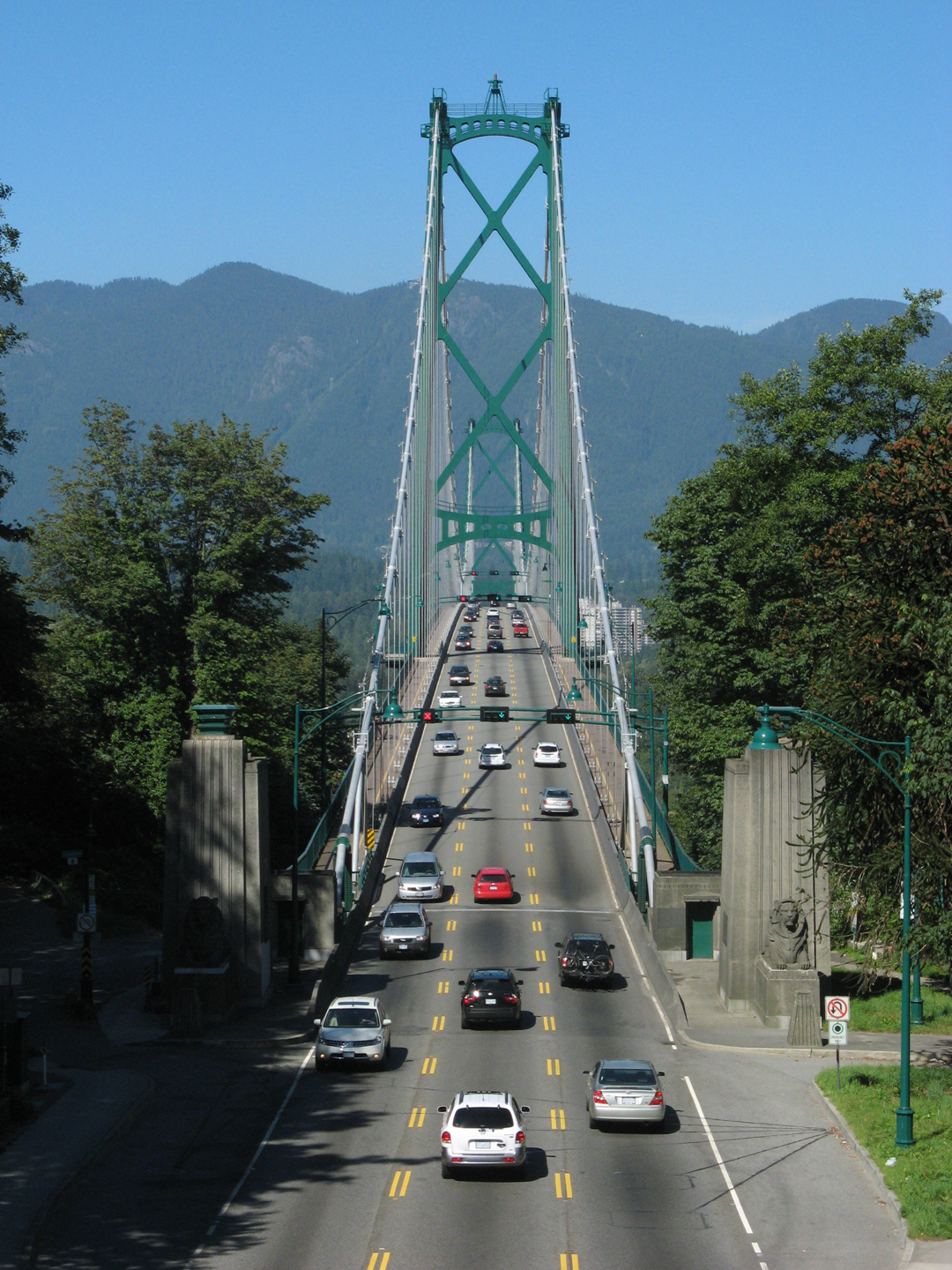

It used to be just sign controller (the signs are still there) but people are bad at observation. Even now when they have a gradual lane closure people still get 'caught out'. There's about 2km notice of which lanes are open.