Your diatribe is a complete distortion of economic history and facts, best crystallized by your use of "concentrated wealth" when what we have witnessed is an enormous creation of wealth.
Search engines, social networks, mobile phones, high-speed Internet, same- and next-day e-commerce, interactive maps, video streaming, 24/7 access to world-wide news and commentary, electric cars, cloud services, solar panels, wind farms, fracking, online banking, fitness monitors, 4K tvs, retina displays, tablets, e-book readers, voice-activated assistants, cleaning robots, advanced medical devices, tailored drugs, reusable rockets, etc. etc. are all created and those who create and finance the creation of these products and services deserve a) our accolades and admiration and b) reaping the rewards of their actions.
>Your diatribe is a complete distortion of economic history and facts, best crystallized by your use of "concentrated wealth" when what we have witnessed is an enormous creation of wealth
Yes, created and concentrated. It used to be that economic activity led to the improvement of everyone's lives. Think the model that worked great for us from post WWII, until the financial deregulation and tax cuts of the 70s/80s. Now it leads to record corporate profits which enrich a select class of wealthy shareholders.
The average American has been absolutely forgotten and left behind, as evidenced by our current political climate.
Please get a grip on reality. The average American has access to vastly better products, services, and health care than past kings couldn't even have dreamt of. Even the amazingly wealthy Rockefeller did not have access to the modern bounty that the average American can easily buy and use today, the bounty that is being created by entrepreneurs and people in the corporations you apparently envy so much.
Sounds like you have turned engineering into a religion, where no result--under any circumstance whatsoever--should be subjected to the critical faculty.
I don't want to "smash capitalism." I just want to run a Dawkins on your religion.
What a sad spectacle: the delirious lashing out at modern machines, the sarcastic capitals, the unhinged cries of "religion". Next time I chat with Richard we'll have a laugh as I mention how his name is invoked as a shibboleth by rabid Luddites.
Your substantive comments to this site are fine, but your political/ideological battle comments and personal attacks are absolutely not. We've given you a ton of warnings and you've ignored them, so I've banned this account until you indicate that you will use HN as intended in the future. Feel free to email hn@ycombinator.com if you want to provide that.
Mueller appears to be a modern Torquemada. Should every politician be hounded by a nemesis of their own?
In the spirit of "Quis custodiet ipsos custodes" -- politicians should be under constant surveillance and at risk of removal and punishment lest they always behave like angels. Isn't this the new standard in Western countries? In China, I have been told Confucian legal scholars recommended the threat of capital punishment for corrupt administrators.
Make it a high karma cost. E.g. you must have been upvoted 10 times to be able to downvote once. That cost can climb up for people who generally don't significantly upvote more than they downvote.
[added] I've noticed that sometimes in a deep conversation between only two commenters -- where they cannot downvote each other -- one of them gets their comments downvoted within a minute of posting or so, suggesting that there are parallel accounts used to downvote as a method of intimidation or retaliation.
I've seen something that may be related - a comment abruptly getting downvoted twice. That can happen just by coincidence, but it seems to me that it happens too often to multiple comments in the same thread.
Maybe we need something like keeping track of the IP address of downvotes, and seeing if multiple downvotes to the same comment come from the same IP address? Or seeing if two accounts have a strong correlation of downvotes?
You are claiming that, in response to a news story, the intent to remove a shadow ban applied to notorious Republicans but not to any Democrats is "favoring" Republicans. [added: And you've been upvoted]. Natch.
Yes, the intent to remove the shadowban applied by an automated troll-control system to prominent Republicans because their posts engaged in troll-like behavior (and not to Democrats because they did not engage in the behavior that the system was aimed at) behavior favors Republicans.
And, specifically, trolling Republicans.
You'd think Republican sympathizers would get that, since they are the ones who spend so much time arguing (usually against a strawman in the specific context they argue against it) that seeking equality of outcome across a status differential rather than status-blind equal treatment by merit/behavior is status-based favoritism.
Do you seriously believe Twitter management is incompetent enough to:
1) not notice this
2) not do anything about it
And of course, if one assumes they are in fact smart (how much do they get paid ?), one has to conclude they know. If they know, they caused it, at least through inaction.
But I'm not 16 anymore, and I don't believe it's merely inaction.
We should probably look at the exact tweets that supposedly got them shadowbanned before jumping to conclusions as to whether or not they engaged in "troll-like behavior".
To be fair you are sort of assuming their troll detection is very accurate, however these users have apparently not said enough to get banned, which makes it seem like an error on Twitter's behalf.
I'd like to understand what reasoning one goes through to embark on such an illiberal path.
(Note: not arguing that they can't legally do it, obviously a private business is free to promote or hinder various messages on its own platform. I'm wondering about internal justifications, and logical consequences. Ethics and morals, in other words.)
From the article: “I'd emphasize that our technology is based on account behavior not the content of Tweets.”
It sounds like it's an automated system attempting to de-emphasize certain uses of the platform, not someone standing there going "Okay, Republican? Shadowbanned. Next? Republican? Shadowbanned. Next?"
i.e. if you don't want to be shadowbanned, maybe stop acting poorly.
Most likely this is an AI/ML bases system that is doing Natural Language Processing to determine if an account is exhibiting "bad behavior"
That means first they identified many badly behaving accounts, trained their ML model to auto-detect other accounts behaving badly, and then banned them.
Of course, these ML models are famously hard to decipher.
The implication?
Twitter could choose to mention the criteria they used to select the original set of accounts they used to train their model (most likely it was accounts that had been manually banned in the past, these would have been bans which went unnoticed by the media) but they can't say "our model auto-bans accounts which do X, Y, and Z" because the logic used by the ML models is too obscure for any person to understand.
> Twitter could choose to mention the criteria they used to select the original set of accounts they used to train their model
The first step to blocking trolls is to not help them understand how they got identified. Seriously, ask Google what algorithm they use to block scammers. They aren’t going to tell you, because then the scammers will just use it to screw with search results even more.
With all due respect, I don't see how "the accounts of some republican congressmen are being shadowbanned" necessarily implies "shadowbanning isn't based on general account behavior". Could you explain?
Beats me, but I don't have access to all the account behavior data Twitter does, nor do I know what metrics they use to determine whether to shadowban an account. It certainly doesn't seem to be based on political affiliation since many Republican political accounts haven't been shadowbanned.
That's a very vague statement which doesn't explain why it's a phenomenon frequently occurring with republican accounts. Besides it's very easy to create rules and only enforce them selectively, then just dismiss criticism with "we're just enforcing the law": as we've seen with over-policing in black communities and excessive probation in sentencing. Why not be more specific? They also said:
> “We are aware that some accounts are not automatically populating in our search box and shipping a change to address this.”
So is it a problem with Twitter or not? What code are they "shipping" to fix this? What type of "behaviour" gets you shadow-banned? How is it enforced (by humans at Twitter, manually reporting by users, machine learning, etc)?
Twitter is under no obligation to be transparent about underlying fundementals of, or report on, their internal platform integrity efforts.
Isn’t that the same argument we’ve talked about with “less desired” platform participants? Their platform, their rules. Free speech is not a requirement there.
Free speech not being a legal requirement doesn't mean it shouldn't be a goal strived for by private companies creating critical communication platforms used by hundreds of millions of people. There were very good reasons why humans started championing free speech and free press. The utility of those fundamental ideas isn't limited to just governments, so I don't know why we should give Twitter a pass simply because the constitution only applies to government...
Not all good, valuable ideas have to be enforced by law either. We can create strong social pressure and promote ethical company culture in silicon valley and push (legitimately) liberal values. We can also make market alternatives, delete accounts, push for boycotts, investor activism, create value-based industry organizations, etc to put pressure on them economically.
I fear those ideals are beyond what we’re capable of at this point in the societal evolutionary cycle.
When the carrot fails, you fall back to the stick. Twitter didn’t use the stick first; it waited until the interactions on their platform turned into a shit show first.
Free speech and transparency are ideals, not just laws. It's not unreasonable to hold a platform accountable for its ideals, even if it isn't doing anything illegal.
On a more pragmatic level, if they're standing in the way of political speech by elected politicians without transparency, those politicians will eventually decide to legislate against Twitter.
> Free speech and transparency are ideals, not just laws
Yes, and the ideal is that individuals will be free to express themselves both by creating content and in choosing whether and how to distribute content, whether their own creation or others.
> On a more pragmatic level, if they're standing in the way of political speech by elected politicians without transparency, those politicians will eventually decide to legislate against Twitter.
That retaliation, unlike Twitter's action, would violate both the ideal and the Constitutional law of free speech.
Elected politicians aren’t entitled to free speech on a private platform. Attempts to legislate against Twitter would result in a Supreme Court escalated case with the legislation in question being sent back to Congress.
Remember, only the government is required to permit free speech. They cannot compel private parties to do so.
Most likely this is an AI/ML bases system that is doing Natural Language Processing to determine if an account is exhibiting "bad behavior"
That means first they identified many badly behaving accounts, trained their ML model to auto-detect other accounts behaving badly, and then banned them.
Of course, these ML models are famously hard to decipher.
The implication?
Twitter could choose to mention the criteria they used to select the original set of accounts they used to train their model (most likely it was accounts that had been manually banned in the past, these would have been bans which went unnoticed by the media) but they can't say "our model auto-bans accounts which do X, Y, and Z" because the logic used by the ML models is too obscure for any person to understand.
That's a very vague statement which doesn't explain why it's a phenomenon frequently occurring with republican accounts.
Well if we put aside conspiracies and the like, then the answer is because there is a correlation between antisocial behavior and “prominent Republicans” on Twitter. I don’t know if that’s the case, but based on who calls me a “spic” most often when interacting online I wouldn’t be shocked.
I suppose the one that comes to mind is Donald Trump saying people from Mexico are the worst and rapists. Oh, you said congressman, let me retract that.
Isn't the point of this article to say that prominent Republicans are being shadow banned? Not sure why OP to my comment asked if only (R) congressmen were calling people "spics." Is no one going to downvote a comment that clearly tries to obfuscate the original intention of the article? This is why karma on HackerNews is the worst form of cryptocurrency.
A publisher or distributor of content provided by third parties selecting which content they wish to relay rather than being content blind is not taking an illiberal path (except, perhaps, if they do so to selectively promote an illiberal viewpoint, but that's not the level you seem to be challenging.)
In fact, it's key to the liberal marketplace of ideas and exactly the behavior freedom of speech and the press exists to support.
It's easy. The reasoning goes like this (I don't agree with this reasoning, I'm just spelling it out).
It starts with a perceived axiom, or an intuition if you like: People are very different inside. Although the difference between the best people and worst people is very large, anyone can improve themselves through reflection and thought and listening to the ideas of people better than themselves.
But logically, not everyone does so. Some people are much smarter than others. And some are much more moral than others. Also, if listening to good people can make someone better, then listening to bad people can make someone worse.
This makes certain kinds of people very dangerous. Smart but immoral people can easily influence less smart people and convert them into immoral people too. In fact this is almost sure to happen if smart+immoral people speak and are listened to, because the vast majority of the population is pliable and easily persuaded. They decide how to vote by reading newspapers and even tweets. If bad people have access to a platform like Twitter, then their badness will spread like a virus.
But we don't want people to become bad. We want them to become good. That means it's important to ensure that only good people have platforms on which they can speak and be heard. If we don't deny bad people platforms, then that is itself a form of immoral behaviour, no better than not washing our hands and spreading germs that way. We wouldn't spread physical illness so we shouldn't spread the mental illness of immorality either.
What is immorality? Well, a strong sign someone is a bad person is that they argue against obvious and simple solutions to important problems. They dissemble and prevaricate and may even try to block implementation of solutions. Republicans seem to often deny and fight against solutions to important problems like healthcare, or the plight of refugees from the third world. Whilst they have justifications, they often seem indirect and slippery, like "this change will make things worse rather than better because government is incompetent", although that's hard to believe because smart and moral people are often attracted to public service (smart and immoral people are in contrast attracted to profit-seeking endeavours).
Therefore Republicans seem immoral, but they keep winning elections so they must also be smart. Smart + immoral = dangerous. If they can speak, they might brainwash good people like my friends into becoming Republican too, and that would be terrible, because how will we cure cancer and solve hunger with Republicans in charge?
So - the only good and moral thing left to do is find ways to suppress their speech. It's for the greater good.
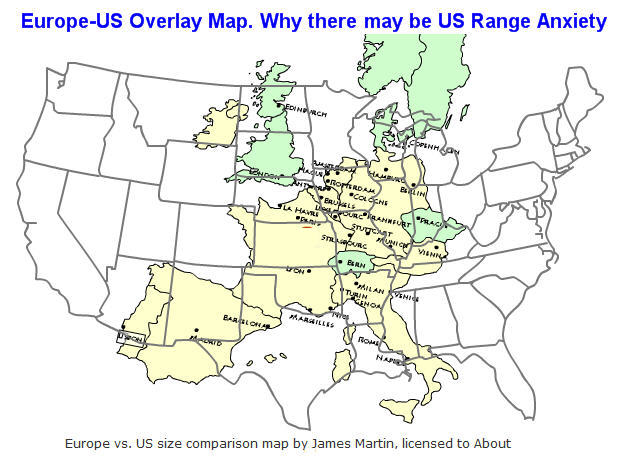
For our American friends who constantly claim that the USA is unique because of its size, or because of lower population density (whether the subject is Internet connectivity or railroads) -- Europe is 33% larger than the USA (contiguous 48); Finland has 16 people/km2, Sweden 23/km2, USA 33/km2, California 97/km2; Sweden is slightly larger than California, Finland is slightly smaller.
Have you ever tried to go from New York to San Francisco? It's the same distance as driving from Porto, Portugal to Abisko, Sweden. You go through 8 countries. Or Porto to Mariupol, Ukraine, in only 7 countries. It's faster in the US, through 10 states as big as European countries.
We have more people stretched out over more land with more varying regions with more varying needs and costs with more conservative social, political and economic values. Nearly all of our trade involves trucking and cargo ships, with freight making up the raw material shipping that isn't time sensitive.
It makes no financial sense whatsoever to fund railroads. We have extensive interstate highways and most of our people have cars. Why pay for a railroad the size of Europe when you don't have to go all over Europe, and all your needs are met via the existing shipping mechanisms? What would be the point?
If you took our cars away, maybe it would make sense, maybe. But before we pay for railroads we might need to pay for our health care or education.
Freight railroads do a lot more than bulk cargo. For example, they're how shipping containers get from west coast ports to the east coast. Rail freight is a fraction of the cost of the cost of trucking and has mostly replaced true long-haul trucking.
I agree that long distance passenger rail mostly doesn't make a lot of financial sense.
Sure it makes sense to fund long-distance railroads!
Even today, most passengers on Amtrak are NOT riding end-to-end. They are riding between Utah and Nebraska; Or between South Carolina and Vermont; Or Boston to Connecticut.
On the California Zephyr - a coach seat is sold 2-3x times for different segments of the same journey.
I’m a huge fan of passenger rail, and I have a soft spot in my heart for the cross country Amtrak trains, having ridden them frequently in my twenties. But I don’t think you offered evidence that it makes sense to fund Amtrak.
Cross country trains in the US are a perennial loss maker, subsidized by under-investing in the profitable dense population corridors, where we could conceivably invest in high speed rail if there was political will to do so (there’s not, but that’s a separate issue).
Replacing cross country Amtrak with comfortable buses would be faster, more reliable, cheaper, and more acccessible to the population that uses trains. Buses are just lower status in the USA, which I think is a pretty silly reason to keep subsidizing Amtrak’s cross country routes.
> Cross country trains in the US are a perennial loss maker, subsidized by under-investing in the profitable dense population corridors, where we could conceivably invest in high speed rail if there was political will to do so (there’s not, but that’s a separate issue).
How much money does the interstate highway system make? Yet we keep funding that for some reason. How much money does you local streets make ?
And before you pull out the "completely different card" remember that both rail and highways serve the exact same societal need: Moving goods and humans from one place to another. We stick humans/goods in a box with wheels and roll them to their destination.
Explain why the box rolling on asphalt should be subsidized but the box rolling on steel should not?
> Replacing cross country Amtrak with comfortable buses would be faster, more reliable, cheaper, and more acccessible to the population that uses trains
I don't believe you have ever taken a bus long distances. I have. Its like being stuck in an airplane. The long distance busses in Thailand are o.k. However you are still glued to your seat in a way that is not true for trains.
I specifically said comfortable buses. I most certainly have taken long distance buses that were not comfortable.
Train focused people need to get over themselves on the highway system. That is what path dependency is. Of course, as a train loving person, I wish the automobile industry hadn’t played so many dirty tricks to get us to an investment posture that makes passenger rail irrelevant, but pretending it’s not so doesn’t help.
Pretending that Americans aren’t happy to pay (whether through gas taxes or the occasional new-construction-over-maintenance boondoggle) for highways and local roads is a fantasy.
Americans, on average, don’t like trains. My wife, specifically, refuses to let us travel by train anymore, she hates them. It’s very sad for me, but my wife’s perspective is shared by the vast majority of Americans. They like cars. They like airplanes. They don’t like trains.
And there are lots of Americans who DO prefer trains over cars.
Please don't be so broad brush in your statements.
WRT your wife - go to Europe and ride the trains there. Recently I went to Spain. In Spain even the ratty commuter train traveled at 90+ mph.
Ride the TGV or AVE train. Those are quick and comfortable.
If at that point she still feels the way she does fine. But "Americans don't like trains" is a statement that is not correct. On the east coast, Americans use the trains a lot
A much better statement is "Americans don't like an uncomfortable experience"
And in San Francisco Area, Caltrain is electrifying precisely because people love the train so much. Caltrain needs extra capacity and the only way to get that capacity is with electrification. Plenty of Americans seem to like Caltrain. Plenty of Californians are ready to use the HSR project when segments open up.
My wife’s interurban train experiences consist exclusively of trains between German and Japanese cities. She doesn’t like them. It’s not a great look to spend your time telling people that they’re insufficiently cosmopolitan because their preferences differ from yours.
The vast majority of Americans, when polled, don’t like the idea of taking a train between two cities. I say this as a card carrying member of NARP (they seem to have rebranded themselves RPA, but whatever)!
I just don’t think rail partisans are practicing effective politics by pretending that current US voters support tax expenditure’s on rail.
The average California voter might, just barely, be in favor of interurban rail. I think the jury’s still out on that one, because the actual money that’s been approved by voter’s in Prop 1A is so vastly insufficient to the task, but I agree that at least in California, there’s enough popular support to at least try to make a go of a decent modern train system.
Indeed, I've travelled from NY to SF in both directions by road, rail, and air. The only experience that was much worse than my travels in Europe and Japan was by rail (namely Amtrak).
There are more people in Europe, there is more land in Europe, etc. Stop with the fake excuses.
Europeans enjoy all of it: cars, trains, and airplanes. The simple fact is that North America is lame and deficient in passenger rail transportation compared to Europe and East Asia, and the comparison keeps getting worse.
We have states as big as European countries with nothing but corn. The only people paying to cross that are people going across the coasts, which still takes three days by train compared to a day and a half or two days by car.
Amtrak long distance trains UNLIKE airplanes are used to connect cities in the middle to other cities in the middle.
Amtraks trains from the west coast to Chicago sell the same seat 2x - 3x over the course of one journey. Most people are NOT going end to end. I have ridden the California Zephyr from California to Denver.
I have see others get on (there are seat tickets) :
Well duh. The key to making trains useful is having people focused in heavily populated areas. If the US were like Europe, some heavily built rail in the Midwest would cover the vast majority of the population.
Russia isn't Europe and that map is pointless because it's just showing some railways without ridership details. The US also has a massive rail network, it's just almost exclusively used for freight.
Your map didn't show ridership either; the purpose of mine was just to show that the European railway is larger than what your map showed. And it certainly is used by passengers all across its length, from Faro to Moscow and beyond.
This is a pretty inflammatory way of saying, “Americans like cars and airplanes. They don’t like trains.”
You’re only making the argument harder for Americans (like me!) who like trains by being dismissive of excellent path-dependent and population-dependent reasons why the US passenger train networks died out.
Nope. I'm saying that Americans are unfortunately missing out on what is elsewhere a great, modern transportation system. If the federal government hadn't used massive war-driven budgets to replace rail with highways, and continued to massively subsidize highways, you'd be there, too.
Yes, if we had not invested heavily in both highways and airports, we may have invested more in trains (there were other problems with the railroads at the time). But that was over 70 years ago. It's not an "excuse" to explain that things are the way they are, and that it makes no sense today to fund renewed railroad investment.
There's a reason we're flush with self-driving car companies and not railroad companies.
Passenger train service in America needs to be returned to the private sector, without any interference by Congress. [added] Or you can watch the government fuck-up and quickly cast blame on the private sector. Private passenger services would have different, satisfying contracts with the rail owners; this is what companies do in the private sector some people apparently hate so much. There was a time when privately operated railroads were reliable in this country.
Freight currently has deleterious right of way because this is what bureaucrats have agreed to. Imagine these bureaucrats did something similar on the highways you all love so much, making passenger vehicles wait on the side to let trucks move a little faster.
Except that Amtrack is consistently late on the NEC and other regional lines that they have priority on. Really annoying when you are on a train waiting to pull out of a station and can't go because a late Amtrack has priority.
I know Penn is a major bottleneck (we have Christie to thank for that after killing ARC), and there's the added problem of delays conflicting with Metro North/NJT schedules.
We need infrastructure investment in dense corridors if we're to get anywhere remotely near European or Asian standards.
It's not clear to me we even have "dense corridors" like in Europe. I was in Munich, and driving in from the airport what struck me is that the city just ends. The city is 1.5 million people. Then there is another million or so people in the metro area, and 30 minutes outside of downtown its farms. Contrast Philadelphia, which is at the center of the U.S. "northeast megalopolis." It's also 1.5 million people, but there are another 4.5 million people in the surrounding sprawl. You can go an hour outside Philly in almost any direction and still be in suburban sprawl. That totally changes the transit equation. You build high-speed rail to Munich, and you're serving more than half the population of the metro area. You build high-speed rail to Philly, and you serve just a quarter of the population (while the other three quarters is stuck paying for something they have to drive to get to anyway).
This is true at multiple levels of scale. Compare Ulm, Germany to Richmond, VA. Both are about 100-200k people. Aside from a few appendages, you hit farms 2-3 miles outside Ulm in most directions. Richmond, by contrast, is surrounded for 8-10 miles in all directions by suburbs, which have another million people. When it comes to voting for things like transit or train service, the people in the city that might benefit from it are totally outnumbered by all the people in the suburbs who can't.
Acela already exists. It's not very high speed at all, it's consistently higher priced than other competing options like planes or buses, yet it manages to fill seats to the brim. Even at its slower speed, it manages to be preferable to slogging it to an airport, dealing with the security theater, either the mad rush to the plane or the endless waiting, and then doing the whole process in reverse once you land at your destination.
In fact, high speed rail could also be transformative for international travel; airlines could bundle a high speed rail ticket with a much cheaper transatlantic flight from Philly, as opposed to paying out the nose for a flight out of EWR or JFK.
Acela is a great example of why high speed rail in the U.S. is a stupid idea. It's primarily used by business travelers between Boston and DC (and points in-between). Even if Amtrak didn't have to support money-losing long distance routes, Amtrak could not operate Acela without Congress footing the bill for capital expenditures. (Acela runs an operating profit, but that's ignoring the fact that Congress pays for the tracks and trains.) Why the heck should the other 80% of the country pay tax money for a service that's only useful to well-off travelers in the northeast?
Richmond is a great example of the problem. I actually took an Amtrak train to Richmond last weekend, and I was struck by how annoying it is to be there for even a short period of time without a car. I stayed in a hotel downtown that had a couple restaurants within walking distance, but for everything else I ended up taking Ubers. Amenities like gyms, shops, and even pharmacies are spread out enough that almost everyone drives everywhere, even in the neighborhoods within the urban core.
This is probably a major factor that makes Amtrak less preferable than driving even when it’s available - once you get to almost any place in the US, you’d prefer to have your car. Amtrak stations also don’t generally have convenient car rental locations with extended hours like airports do, so that’s not even an option to deal with it.
I think this is a good observation. The USA is just too spread out for rail travel to really work well. Most European countries are no bigger than a medium sized US state, and the cities are denser and smaller than American cities. It's easier to run a rail route between two European cities and realistically serve most of the people in those cities. And the cities aren't so far apart that flying becomes a really time-saving option.
> China launched services Wednesday on the world’s longest high-speed rail route, linking the nation’s capital in Beijing all the way to the country’s southeastern hub of Guangzhou.
> Averaging speeds of up to 186 m.p.h. (300 km/h), the 1,425-mile (2,293 km) route now takes eight hours to complete;
New York to Los Angeles : 2775 miles. Or double the above line. 16 HOURS via High-Speed train. 16 HOURS.
As a point of reference flight time is 6 hours. (Not counting being at the airport 2 hours early, etc.) - so lets just say ~9 hours for a plane. So a plane is twice as fast; but with significantly less capacity.
You are deeply wrong and need to look at proper maps.
Europe is 33% larger than the USA (contiguous 48).
[added]
Note sure why this fact would be down-voted. We don't include Greenland or e.g. French Polynesian dependencies in the European total. Sweden is slightly larger than California, with 1/4 the population. Et caetera. Really, you should look at maps, population facts, as well as the extent and quality of railroads.
And quit pretending that there is no rail connection across Europe. [1] America is failing when it comes to 21st century pubic transportation. Angrily lagging behind European, Japanese [2], or Chinese [3] railroads is not a healthy path.
Define "Europe." "Europe" doesn't have high speed rail. Germany, France, etc., do, and those countries are a lot denser than the U.S. and most U.S. states. Moreover, U.S. cities are shaped very differently from Western European ones. Take the ratio of (city population) / (metro area population) and compare the U.S. state capitals to European capitals. In Europe, it's common for the majority of a metro area to live within city limits, even in small cities. In the U.S., the only major city that gets close to that benchmark is New York.
Capacity. Rail is pretty much unbeatable in terms of pure people per hour. The Tokaido Shinkansen carried 143M people in 2012; the busiest air route in the world, Seoul-Jeju, carried 11 million people in 2015.
From the (admittedly not great) source of CAHSR:
> Providing the equivalent new capacity on the state’s highways and airports would cost more than double
the investment required to develop a high-speed rail system between San Francisco and Los Angeles. If it
was even possible, that would mean building 4,300 new highway lane miles, 115 additional airport gates,
and four new airport runways at an estimated cost of $158 billion. [...] Caltrans estimates operations and maintenance costs on those new highway lanes at
$132.8 billion for over 50 years.
Planes are terribly polluting, and unlike trains, there's no expectation that can be changed anytime soon. If you properly accounted for that externality, trains might be profitable after all.
Amtrak continues to require government support to cover its operating expenses, while Deutsche Bahn,[1] manages to turn an operating profit. So how is Amtrak "defunded?"
[1] Deutsche Bahn is owned by the German government, but unlike Amtrak is operated as a private company.
The issue isn’t who runs it, it’s that the trains don’t have tracks to reasonably run on. Elsewhere, when passenger trains are delayed, every effort is made to get them back on time again - in America, they’re left for hours in a siding while freight trains go by.
Rightly so. Rail freight is important in USA, while rail travel is not. We already have too many semi trucks on the roads; it would be foolish to force more freight onto the highways to pander to some dream about rail travel.
No. Legally, Amtrak always has priority over freight. There are cases where host railroads are badly behaved but more often the problem is that Amtrak is poorly operated.
Hahaha. Have you seen how it works in England? Yet again the East Coast route has returned to public hands because the private operator felt "it wasn't profitable enough"
LNER (the public operator that replaced it) is pretty good, too; my train from King's Cross to Edinburgh was only 6 minutes late to arrive (very little jitter for a 4.5hr service) and the service onboard was great too.
Have you inquired into why they became unprofitable? Have you considered the massive government investments into and subsidies for the two other modes of transportation following WW II?
I don't think they were ever profitable. I think they became unbearably more unprofitable after WWII, but I think they were unprofitable before that.
And, when you talk about government investments into the two other modes of transportation, I presume you mean air and highways. You forgot waterways - also created/improved with government investment.