We don't want to spin up wafer fabs because, historically, they had a tendency to turn into Superfund sites. That's why the more modern approach is to build the fab in the middle of a frickin' desert.
Historically, but likely not anymore. You wouldn't be allowed to casually poison the ground in a Western factory anymore and we have the technology to keep the environment mostly clean. I don't even see it being very expensive compared to other fab costs. Have a sealed floor and proper waste / exhaust processing, don't spill in the first place. Things must be extremely well controlled anyway.
That’s never a good, long term business model and people are willing to pay more for Apple hardware because it tends to last longer than others. We’ve heard this cynical take for years, but I don’t think that it is really convincing.
A calculator is more consistent and faster at calculating than I am, but I still need to understand how to multiply, divide, add, and subtract before I can move on to more complicated math. I need to intuitively understand when I'm getting a garbage result because I did an operation wrong, moved a decimal place by accident, or other problem.
Memorization has a place, and is a requirement for having a large enough knowledge base that you can start synthesizing from different sources and determining when one source is saying something that is contradicted by what should be common knowledge.
Unless your vision of the future is the humans in WALL-E sitting in chairs while watching screens without ever producing anything, you should care about education.
> A calculator is more consistent and faster at calculating than I am, but I still need to understand how to multiply, divide, add, and subtract..
Exactly. If the calculator knows what to do and how to do, you just need to be able to specify a high level goal, instead of worrying about whether to add or multiply.
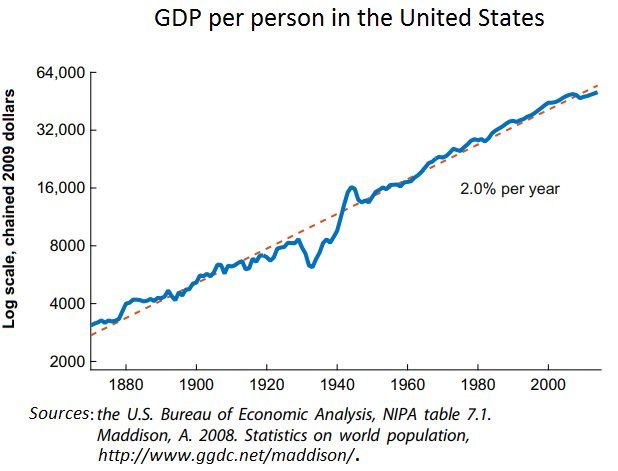
How much of America’s growth since the 40s is attributable to its hegemony, stability, and the emergence of USD as the reserve currency of the world? And where other developed, stable nations started dropping in population, the US continued growing thanks to immigration and its center as a research Mecca.
All of those are being unwound as we speak, and it’ll take decades to prove to the world that any trade policy and government agreements may be kept longer than 4 years.
Part of why Switzerland is so stable is because of its neutrality. Switzerland doesn't have to deal with Russia interfering in its elections the way the US does.
The soft power is partly based on the belief that the systems it’s built will constrain the US into acting reasonably (at least from the west’s perspective). The Greenland thing was not shut down on the US side hard enough and that has shattered that. Now Europe has to contend with the fact that the US system won’t rein in a president that goes too far, and so it basically has to be treated like the absolute dictatorships with all the risks of a mad king that goes with that
Does not mean too much coming from Europe when the EU wants to militarize and the institution is closer to absolute dictatorship than democracy. Similar to Canada and Europe talking about colonizing the world with the US yet Greenland is an issue lol.
I should’ve also said that like the US, Europe, Canada, Australia, Israel are very very racist, chauvinist, exceptionalist. That benefits US hegemony.
Something also not brought up much is how many people have colonized minds around the world. Colonized minds don’t largely change because of a temporary brash leader.
I believe the damage is done and there will be no going back to the old ways.
This time around I'm sensing a real change in attitude. People in Europe are sick and tired of all the US bullshit that's been going on for far too long. It's not just the lunatic in the White House. It's the whole system that's being rejected. The endless greed. The bigotry. The war on everything.
Peaceful cooperation and coexistence, that's what we want. I'm for my part quite happy and optimistic about the deal with India and I hope more regions will follow soon.
Europe and the five eyes are far too racist and/or chauvinist for what you’re saying. HN is a great microcosm of liberal (which is western and white) ideals and thinking. You can’t really post about resistance to western hegemony here or in most situations around Americans, Canadians, Europeans.
Something not brought up much is how colonized minds works. Colonized minds don’t suddenly become uncolonized because of a brash leader. Eastern Europe since the fall of the Soviets is a great example of this.
The soft power stuff has been canned. That has not generated good will, but that act pales compared to kidnapping, threats to invade various places and the destabilising effects of chaos as a leadership strategy.
The US has done those stuff since world war 2 ended. Continuously. Trump has hurt things but if anything bringing up things the US has always done as if it is novel under Trump shows how well US hegemony works and will continue to work.
Another thing no one is bringing up is how colonized minds works. Colonized minds don’t suddenly become uncolonized because of a brash leader.
Trump might be gone but project 2025 will continue. They're now most of the party, his cabinet and they're replacing government employees with loyalists (hiring program was part of it). They're attacking the election system again, maybe it won't work but there's a pretty big chance it will.
But no, you can make 3-4x in the US. That’s not an exaggeration. And before someone says ‘free healthcare’, big-tech employers in the US provide pretty nice insurance for employees that caps maximum out of pocket expenses to about a week of your salary.
EU (except Zurich and London) tech salaries have sort of stagnated to a point that you make about the same in Bangalore, and spend significantly more.
In silicon valley, you can not afford to underpay good engineers, as they'll move across the street and get a job that pays double after a year.
In most other places, this ecosystem does not exist because it is ridiculously difficult to start and operate a company unless you are part of some conglomerate.
Keep in mind the salary is 3-5x for big tech positions with 5+ years of experience. Check levels.fyi if you don’t believe me.
> Days that you can actually take without losing the chance for a promotion?
Europe wins hands down on this. I happen to have a great employer where I have taken 4-5 weeks off a year without issues, but that’s not the norm in the US.
Free education and childcare doesn’t come close to shrinking a 300k USD gap in total compensation. Real number in my case, I looked into moving to Berlin last year.
> Not to mention the fascism problem of course.
Agreed.
The US is going in a terrible direction with this. I hope Europe has learned from history and won’t follow.
You're in the minority now in EU if you can afford to have those things now. The housing and CoL crunch is real and many industries suffered layoffs. Q3 2025 youth unemployment is around 20-25% in several EU countries including developed ones like Finland, it's no longer an issue just for the less developed southern ones.
>I am not sure if the extra money in the US would be worth it.
Since you already have a house and everything, then yeah it makes no sense for you. But I would do it in a heartbeat if I could.
> You're in the minority now in EU if you can afford to have those things now.
A quick search tells me that home ownership in the EU is Approximately 70%, ranging from around 95% in countries such as Romania and Slovakia, to around 50% in Germany. Non-EU citizens disproportionately owns less houses.
So, no. I am not at all in the minority.
Youth unemployment is an issue, being 15% in the EU as a whole, with some countries hovering on 30%. The US has 10% of youth unemployment (considering their labor laws are appallingly bad for workers, I am not sure if this is much of an improvement).
> Since you already have a house and everything, then yeah it makes no sense for you. But I would do it in a heartbeat if I could.
Good for you, may you achieve your goals.
I didn't own a house until a year ago. Refusing offers from the US and moving to EU was likely the best decision I ever made.
I had a life threatening illness not long ago. In the US I would likely be either bankrupt of dead. I appreciate the safety net and labor protections here, even with the higher taxes.
I don't get the obsession with the US here. That's a different country than the EU where I(and you to afaik) live and the target of the topic.
If I can't afford a house, it makes it no better to me if you tell me that some people in the US also can't afford one, like that's supposed to make me feel better or something.
And with 50% home ownership statistics, it seems I'm not alone. I'm glad the system worked for you but it failed me and so I will vote to those who put my interest first and not devalue my labor.
This conversation, that you replied to, was a consideration of whether it made sense to move to the US. You mentioned that if you could move there, you would.
I presumed it worked as a basis of comparison?
> And with 50% home ownership statistics, it seems I'm not alone. I'm glad the system worked for you but it failed me and so I will vote to those who put my interest first and not devalue my labor.
I presume you live in Germany? I know some engineers who live there, I used to work with a team based off on Germany years ago.
They are doing fine.
I don't really care who you vote for. Based on your stance, I presume you blame immigrants for "devaluing your labor".
Contrary to you, I believe that with more trade and movement of highly skilled people, economic progress follows.
I don't believe stagnation is a viable strategy. You are free to believe otherwise.
I may be wrong but my understanding is that it's not uncommon to find out someone in the USA is a private pilot, no matter what their job is (e.g., if your grocer or mechanic mentioned they have a license you'd not be shocked).
Apparently it's much rarer in the EU, but that might not only be a cost issue.
Cost is not a barrier. Entry-level kit aircraft are cheap in the US, as in cheaper than some of the fancier trucks. The very basic micro-lites are cheaper than any new car.
Conversely, Europeans workers get to enjoy some hobbies more than Americans - such as frequent travel - not because of how much they earn, but because of work culture and paid vacation time rules.
>A European tech salary would be about 2x of the median
Not even that if you're a worker in rich/developed EU country, unless we're talking FAANG/big-tech, since here SW dev wages are relatively close to national medians so an average SW dev worker doesn't take home 2x the the median.
Issue further compounded by the high taxes on higher wages and more generous government benefits and tax credits for those on lower wages, and suddenly the take home difference at the end of the fiscal year between a SW dev and average worker narrows down even further, to the point that it's not a career you get into for the money, like in the US.
BUt if you're in the less wealthy EU countries, with lower taxes and less welfare benefits, where the national average wages are lower in comparison to tech wages, like from Poland to Bulgaria then yeah sure, you can easily take home 2x-5x the national median in tech because the other industries are a lot less developed compared to SW products and service industry versus places like Germany or Norway with more diverse and developed industries raising the national average wages for everyone making tech workers feel underpaid.
You are however making sweeping generalizations that you extrapolate from your own personal experience, while making hard connections between quality of life and the ability to earn more than your peers.
Meanwhile the Nordics for example consistently rank much higher in health, happiness, and quality of life, despite having lower top wages.
My point was that if you have a senior level big tech job in the US, it makes zero sense to move to Europe unless you have family there or want to make a significant financial sacrifice.
Obviously Europe wins for workers in general, and if I wanted to work in a car factory’s yes I’d do my best to work in Europe.
I looked at your other posts in this thread. The lifestyle you describe is not the average US based developer lifestyle. You must live in a very selective circle. Because I only know one developer who owned his plane-that Canadian guy who literally coded the first version of S3, became irreplaceable so AWS let him move to Oregon and he was commuting by plane. And I only know one developer who owned horses-he actually made his money by buying a whole bunch of land in Kirkland in the 90s. These are the only two examples out of probably more than 100 developers I worked with.
I know developers who have motor bikes and a Porsche or BMW or, recently, Teslas that sometimes they take to the race track. But this lifestyle is common for EU devs as well.
I am not sure why everyone keeps bringing up the average though.
You have to decide whether it makes sense for you to be somewhere, based on how much you can expect to make and what your quality of life will be.
What the average person makes does not matter except in an abstract sense that equitable societies are better in general (which is absolutely true).
> You must live in a very selective circle.
> These are the only two examples out of probably more than 100 developers I worked with.
People can be very careful about keeping professional life separate. There is a boat owners club in a marina I frequent, the vast majority of the members (out of about 200) are techies, it's a common hobby.
I know several that have a pilot license but only one who bought a plane, it's somewhat convenient to just rent every few months.
What I meant to say is that the lifestyle of the average US dev is not that much better than the lifestyle of the average EU dev. From the examples you gave I only recognized the racing and boating lifestyles - both of which are accessible to EU devs. The planes and horses… not so much.
Now think of a more specific category - big tech employees with 5+ years of experience.
There are a bunch more expensive hobbies, about half of the developers I know (personally outside of work environments) have one or more.
Planes came up because I am getting started with the training for it, horses because my friend has a farm with horses twenty minutes from a major city.
Actual formal engineering jobs in Switzerland come with benefits gold plating better than full federal government employees in the USA. And they’re almost as hard to sack.
Nobody gives out positions like that easily to non geniuses. And even for more ordinary very smart candidates, there are enough of them to have a few hoops to jump through.
> But no, you can make 3-4x in the US. That’s not an exaggeration
Eh, we'll see how long that lasts as the transition from financial capital to global pariah progresses. It's quite possible that our labor is extremely overvalued.
Right now it relies on silicon valley's ability to churn out unicorns again and again.
That part seems to be taking an ugly turn nowadays by a bunch of military AI/drone swarm/etc focused startups. I'm guessing that eventually after the Apple/Google model of making money is dead, you'll have to work for Skynet if you want to make money.
Those "decent salaries" have caused a lot of trouble in the US. They are probably not that good for the society, even if they attract foreign talent.
There is not much difference in labor share of GDP between the US and the EU. People who work for living get a similar share of the value they create in both blocks on the average (maybe a bit less in the US), but it's less evenly distributed in the US.
Top 10% earners are now responsible for ~50% of consumer spending. That doesn't mean billionaires and capitalists, but upper middle class professionals and other high earners. The economy is great on the average, but most people don't feel it.
I don't disagree, as in an abstract sense inequality is bad for society.
Try to understand why the US has high tech salaries though. It is because the last 40 years have made it pretty easy and convenient to start companies.
Hence, good employees always have great options or can just start their own companies.
> Try to understand why the US has high tech salaries though. It is because the last 40 years have made it pretty easy and convenient to start companies.
I thought this was because US trade and foreign policy coerced most of the world to open up their markets to high-margin American services via treaties. It's easy to pay high salaries when you're vacuuming money from around the world, and your product (software) has very low marginal cost of replication.
You're on a site dominated by software engineers, in the field of software engineering, and likely have a lot of software engineer friends.
Translators got fucked, there's very little market for them compared now compared to decades past. Find their forums and I bet you'd have seen similar worry.


You can't just spin up a 2nm wafer fab when the latest you've been running is a 300nm process.
Compare: US shipbuilding industry to China or SK.
reply